description

My own life and my opinions are shared at When I was 69.

REMEMBER: In North America, the month of September 1752 was exceptionally short, skipping 11 days, when the Gregorian Calendar was adapted from the old Julian one, which didn't have leap year days.
Showing posts with label Albert J. "Bud" Webb. Show all posts

Saturday, April 5, 2025

The year without summer and my ancestors

 What tangent might I go off on today? Well, I decided to check on my ancestors who lived through a trying time, meteorologically speaking that is. 1816  is known as the year without a summer .

In 1815 a volcano in Indonesia (as it is now called) caused enough ash to be in the atmosphere that the sun reflected from it, and cold wet weather caused massive crop failures in Europe and the New England states in the United States.

The main cause of the Year Without a Summer is generally held to be a volcanic winter created by the April 1815 eruption of Mount Tambora on Sumbawa.

Countries such as Great Britain, Ireland, and France experienced significant hardship, with food riots and famine becoming common. The situation was exacerbated by the fact that Europe was still recovering from the Napoleonic Wars, adding to the socio-economic stress.

North America also faced extreme weather conditions. In the eastern United States, a persistent "dry fog" dimmed the sunlight, causing unusual cold and frost throughout the summer months. Crops failed in regions like New England, leading to food shortages and economic distress. These conditions forced many families to leave their homes in search of better farming opportunities, contributing to Westward expansion.

In the spring and summer of 1816, a persistent "dry fog" was observed in parts of the eastern United States. The fog reddened and dimmed sunlight such that sunspots were visible to the naked eye. Neither wind nor rainfall dispersed the "fog", retrospectively characterized by Clive Oppenheimer as a "stratospheric sulfate aerosol veil".

The weather was not in itself a hardship for those accustomed to long winters. Hardship came from the weather's effect on crops and thus on the supply of food and firewood. The consequences were felt most strongly at higher elevations, where farming was already difficult even in good years. In May 1816, frost killed off most crops in the higher elevations of MassachusettsNew HampshireVermont, and upstate New York. On June 6, snow fell in Albany, New York, and Dennysville, Maine. In Cape May, New Jersey, frost was reported five nights in a row in late June, causing extensive crop damage. Though fruit and vegetable crops survived in New England, corn was reported to have ripened so poorly that no more than a quarter of it was usable for food, and much of it was moldy and not even fit for animal feed. 

The crop failures in New England, Canada, and parts of Europe caused food prices to rise sharply. In Canada, Quebec ran out of bread and milk, and Nova Scotians found themselves boiling foraged herbs for sustenance.

Sarah Snell Bryant, of CummingtonMassachusetts, wrote in her diary: "Weather backward." At the Church Family of Shakers near New Lebanon, New York, Nicholas Bennet wrote in May 1816 that "all was froze" and the hills were "barren like winter". Temperatures fell below freezing almost every day in May. The ground froze on June 9; on June 12, the Shakers had to replant crops destroyed by the cold. On July 7, it was so cold that all of their crops had stopped growing. Salem, Massachusetts physician Edward Holyoke—a weather observer and amateur astronomer—while in Franconia, New Hampshire, wrote on June 7, "exceedingly cold. Ground frozen hard, and squalls of snow through the day. Icicles 12 inches long in the shade of noon day." After a lull, by August 17, Holyoke noted an abrupt change from summer to winter by August 21, when a meager bean and corn crop were killed. "The fields," he wrote, "were as empty and white as October." The Berkshires saw frost again on August 23, as did much of New England and upstate New York.

Massachusetts historian William G. Atkins summed up the disaster:

Severe frosts occurred every month; June 7th and 8th snow fell, and it was so cold that crops were cut down, even freezing the roots ... In the early Autumn when corn was in the milk [the endosperm inside the kernel was still liquid] it was so thoroughly frozen that it never ripened and was scarcely worth harvesting. Breadstuffs were scarce and prices high and the poorer class of people were often in straits for want of food. It must be remembered that the granaries of the great west had not then been opened to us by railroad communication, and people were obliged to rely upon their own resources or upon others in their immediate locality.

In July and August, lake and river ice was observed as far south as northwestern Pennsylvania. Frost was reported in Virginia on August 20 and 21. Rapid, dramatic temperature swings were common, with temperatures sometimes reverting from normal or above-normal summer temperatures as high as 95 °F (35 °C) to near-freezing within hours. Thomas Jefferson, by then retired from politics to his estate at Monticello in Virginia, sustained crop failures that sent him further into debt. On September 13, a Virginia newspaper reported that corn crops would be one half to two-thirds short and lamented that "the cold as well as the drought has nipt the buds of hope". A Norfolk, Virginia, newspaper reported:

It is now the middle of July, and we have not yet had what could properly be called summer. Easterly winds have prevailed for nearly three months past ... the sun during that time has generally been obscured and the sky overcast with clouds; the air has been damp and uncomfortable, and frequently so chilling as to render the fireside a desirable retreat.

Regional farmers succeeded in bringing some crops to maturity, but corn and other grain prices rose dramatically. The price of oats, for example, rose from 12¢ per bushel in 1815 to 92¢ per bushel in 1816. Crop failures were aggravated by inadequate transportation infrastructure; with few roads or navigable inland waterways and no railroads, it was prohibitively expensive to import food in most of the country.

Maryland experienced brown, bluish, and yellow snowfall in April and May, colored by volcanic ash in the atmosphere.

----------------

So I just spent an hour on my private Ancestry tree straightening out (who or how does this mix-up keep occurring on my tree?) various people who were married to their mothers, and had their wives as their daughters born the year they were 1 year old!

There is one widow whose husband was alive and well and didn't die till after her. But she was called his widow on several original sources. But how were their lives effected by the cold of 1816 summer? No idea...

So I started looking at my ancestors from Massachusetts...to see if there were any deaths in 1816. So far, none.

In the Rhode Island (probably Quakers) family of the Swaseys, one daughter was born on May 8, 1814, in Newport, RI, and died Sept. 20 of 1815, same city. It's interesting that the same name was again given to another daughter born on April 11, 1827, who lived till 1853.

That's all that my sleuthing has discovered, since many of the sisters/brothers of my direct line haven't been "fluffed out." That means many nieces and nephews of 'great' generations haven't even been added to my tree. Since I've already got about 7600 people, with quite a few photos also, I have only looked back at the New England ancestors on my father's line. There probably are some as well on my mom's side of the family.

One ancestor did die age 50 in 1816. In North Carolina. He was John Franklin Tate III. His older sister (Casandra "Cassiah" Elizabeth Tate 1765-1851) was born in Cherokee County, NC. That is the area where the Eastern Band of Cherokee now live. The Cherokee were forced to leave their homes in 1838 and join 4 other tribes on the Trail of Tears, forced removal to the Oklahoma reservation. But it's very unlikely my 4 time great grandmother probably had any Indian blood. She was the first born of 9 children, with John III her next younger brother, who was born elsewhere.

----------

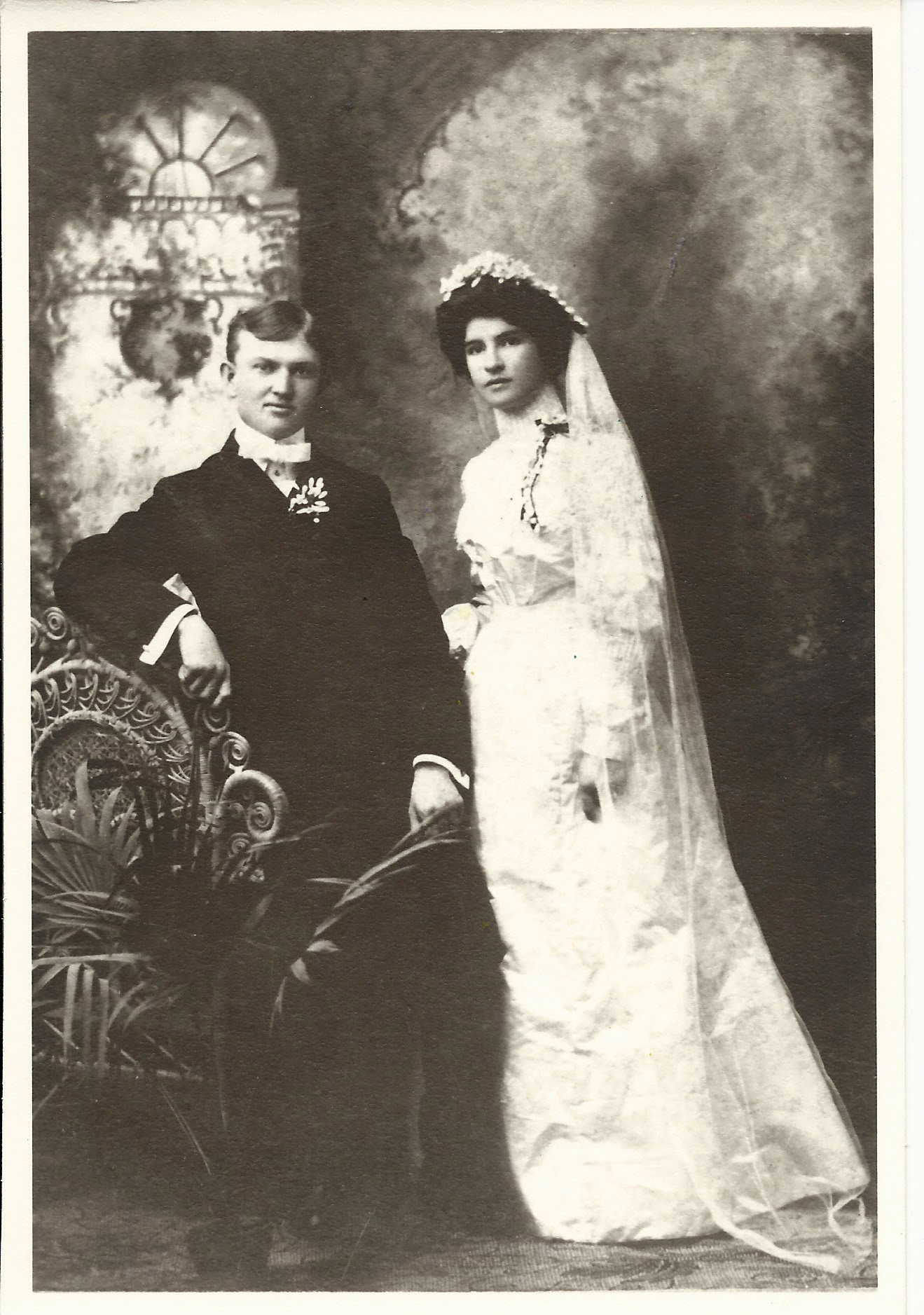
But let's see if I can find just one photo of relations/ancestors looking like the Sepia Saturday posted suggestion.

John LeRoy Webb's wife was Lizzie Hohn. John LeRoy Webb was brother to my own grandfather, Albert J. "Bud" Webb, who had died when my mother was just 2-1/2 years old.

The Hohn Family 1894   Standing L to R: Elizabeth, Theodore, Louis, Emil, Henry ==> Seated parents: Louis & Johanna ==> On lap: John ==> On floor L to R: Paul, Caesar ==> Not present: Oscar (died 1891) & Alexander (born 1896)


From L to R: Alex, Caesar, Paul, Lizzie, Henry, Emil, Theodore, Louis P F

John LeRoy Webb married Lizzie Hohn Webb, and here are lots of men in ties...probably her brothers. Since John LeRoy died in 1938, it's possible this photo was taken after that date since he's not in it....or he was the photographer!


 From Sepia Saturday this week we have...

Women in Suits...hats, and purses, with sensible shoes, and a man.

My photos have an opposite ratio, with only a few women and lots of men!

Monday, June 20, 2022

Happy birthday to Great Grandmother Annie Elizabeth Williams Webb

 Annie Elizabeth Williams Webb...my great grandmother, who I never knew. She died in July of the year I was born in August, and because her son (my mother's father) had died many years before, I doubt that she'd kept in touch with my mother's life. My mother never mentioned her, nor her father.

Annie had been born 20 June 1862, in Columbus Missouri though her parents lived mostly in Montgomery County, MO where her father was a farmer. However, he had gone off to fight for the Union in 1861 and she was born in 1862, so perhaps her mother, Dorcas White Williams, had been living in Columbus, where this birth was recorded.

Annie was the 7th child of 8 born to the William T. Williams family. Only O. R. was born later in 1866. The Williams family moved from Missouri to Texas around 1870, give or take a few years. Her mother had a strange census listing in 1870 of living alone in a boarding house, under her maiden name, and performing as a domestic servant. I noticed that one of Dorcas' brothers, Caleb White, lived in that same town (Upper Loutre in Montgomery County MO) with the post office in Danville. He was the miller in the town, and by the 1870 census record lived with his wife and 5 children in his household. His census was taken 22 Sept. 1870, while hers was taken 29 Sept, 1870. There was also the Loutre River nearby...were they starting their journey to Texas perhaps by river?

There is no information about the rest of the family on the 1870 census record for Dorcas White...nor  her 4 year old son and Annie at 8 years old.  I wonder (yet another conjecture) if the family had packed up for moving to Texas, and was in this small town just waiting for some other immigrant families, and Dorcas just helped out in that boarding house. Or perhaps they all left for Texas earlier, and she had been too sick to travel. Or maybe she was against the move. For whatever reason she was living in that boarding house, I'm still left wondering why she used her maiden name. Who would know that, except her family of origin and herself?

Another noted event in or before 1870, was the death of Henry White, the father of Caleb and Dorcas. At least 6 of his children were still alive at that time. He had farmed somewhere in Montgomery County MO since the early pioneers arrived before 1833.  His wife outlived him, dying in 1885.

Before the next census where Annie appears, in 1880, she has also moved to Texas, and married at 15 years of age in 1877. She doesn't appear in any 1870 census records that I can find. Her husband was Leroy (L.F.) Webb, who had been born in Texas. See here for more about him, and the family, but I'll catch up with his life while married to Annie.


I'm including a "story" I just submitted to L. F. Webb's Ancestry page...about the details of the photo above.

The original photo has been transferred into a printable newspaper version, with the usually digital spots. But if it's enlarged enough, you can read the details across the porch roof facade.

"Dealer of General Merchandise" and below that...

"Country Produce Bought and Sold"

And now to look at the people...about 32 men, and 5 children. One of the men is wearing a white apron...either a butcher or someone just working in the store.

My guess is the man in center, somewhat taller, and somewhat separate from the others around him, would be L. F. 

Slightly to his right (our left) is a shorter man at his shoulder. In front of him stand two children...wearing dresses, perhaps girls. The other children include 2 boys on the roof of the porch by the window, and one in a white shirt, second to far right with the man having his hand on his shoulder.

Note the windows are all open. Summer in Texas gets very hot. But the custom was for men to have on shirts, a vest, and perhaps a coat and even tie for a special occasion.

In Texas all the men wear their hat almost all the time, just like cowboy boots, so they can ride horses to get places.

And remember, nobody used deodorant in those days, nor even bathed often. So the layers of clothing might have been uncomfortable, but they might have soaked up some of the sweat that inevitably would have occurred.

I also would try to guess if the children are those of Leroy Webb's. If the taller one in front of him were indeed a girl, he had 6 year old Clara Bell Webb, and the smaller might have been my grandfather, Albert J. Webb at 3 years old.  Of course his older sons would have wanted to be in the photo too. James Eugene would have been 16 in 1894, and John Leroy would have been 14. Maybe they are the two boys on the roof of the porch, one of whom is the only male not wearing a hat!

Going back further into L. F.'s history, he received a store as his inheritance from his father, Samuel J. Webb, who died with a will on Aug. 15, 1877.

Interestingly enough L.F. also became the executor of the will, and the guardian of his 4 younger brothers and sisters.

Perhaps his father had been sick before dying, and thus had written this will. I imagine he was quite happy to see (maybe attended also) the wedding between his son L. F. and Annie Elizabeth Williams on Aug. 7, 1877, just a week before Samuel died. L. F.'s mother had died just a year before, 6 months after giving birth to the last son. Thus L. F. at 20 suddenly had new wife and guardianship of 4 siblings, the youngest being just 1 year old.  Seems like Annie fit right into a new wife and family guardianship role at once. Of course since L. F. also inherited the family business, it's likely they lived in the family home.

In the midst of all these historic markers in DeWitt County, Clinton can be seen in the midst of a lot of others. It is now the location of the county seat, Cuero.

I just discovered an older census, taken in 1870, which included L. F. and his parents, residing in Clinton, DeWitt County TX. And another census in 1860 shows his father Samuel had been born in Maryland, and Ellen, his mother, had been born in NY on the Clinton, DeWitt County 1860 Texas census, when L. F. had been 3.


The next census for 1880 shows the Webb family living in Goliad TX. This was the site of earlier conflicts when Texas was trying to become free from Mexico. It also was one of the beginning places of the Chisolm Trail, to take cattle all the way to Kansas, on the hoof so to speak. There they could be loaded on cattle cars and sent to cities further east. This lasted as long as railroads hadn't made it to Texas yet.

Where's Goliad County?


This is from a 1940 map, so has many towns, but no interstate highways yet!  If you look up to the upper left side of Goliad, there's the town of Weesatche. The name changed on many maps to Huisache (the Spanish version of the name.) Weesatche was where L. F. had his nice big feed store's photo taken in 1894. And DeWitt County is just above Goliad County.

IN 1900 the family is back living in Goliad TX, in Justice Precinct 3 of Goliad County. So he may have been in Weesatche, or maybe in the town. I can't find the map of Goliad County for 1900.
Some of this map is in English, some in Spanish. But it has a copywrite date of 18?9. I'm not sure when.  See what fun delving into history can be?

OK let's look at Annie's family. She married L. F. in 1877. At that time they were guardians of his brothers and sisters as listed in the 1880 census: namely Phiny (female, age in 1880- 12) Joe (9 in 1880) D. E. (female, 6) and Sam (4). In the 1880 census we find that Annie had her first 2 children already...J. E. (James, 2) and John (3 months old, born in March of 1880).

By 1881 L. F. has been appointed postmaster for Weeshatche, and it's probable that he's running a general store already, much as he had from his father's homestead in Dewitt County. Or it's possible the county line changed where his store was located! He lists his occupation as retail grocery in the 1880 census.

After the first two boys, Annie had a daughter, Laura Mae in 1882, who died in 1887. Her second daughter was born in 1882, "Maggie" was the nickname for Marguerite Ellen Webb, who lived till 1961. She could have told me all about the sites, towns and counties, if I'd known to do this research then.

Tomas Ketch Webb was born in 1886 and lived till 1959. Next came Clara Bell Webb. born 1888. married to Fred Clyde Bruce, and lived till 1971. 

My grandfather "Bud" was born as Albert James (or Joe) Webb in 1891, and lived till 1919. He married my grandmother in 1915, and my mother was born in 1917.

Annie's last child was Leary Frances Webb, Jr. 1905-1937.

I discovered the 1900 census which had been listed for Annie Webb belonged to someone named Etta Webb...and had nothing to do with her. Fortunately L. F. was well documented as Larry F. Webb as a merchandising business, still in Precinct 3 of Goliad County, probably Weesatchee. His household consisted of Annie, his own children Maggie, Thomas, Clara and Albert J. (Bud.). They also had a 25 year old lodger/housekeeper. By then apparently the siblings had grown and gone to their own homes.

By 1910 they had moved to San Antonio, and L. F. was running a Confectionary, where perhaps one or another of his children worked. And Annie had had her "late life" child (at 42) L. F. Jr. in 1895.  Bud was living with them, age 18, was working in a real estate office. 

Great grandfather  L. F.  lived with his family in San Antonio at 130 Lewis St. for several census reports. When my grandfather, Albert Bud Webb, signed his draft card in 1917, his address was 96 Lewis St, (at least a few blocks away), which is still a small cottage.  At that time he had married my grandmother, and my mother had just been born.


2016 street view of 125 Lewis St, San Antonio, TX  Google image, with some strange coloration through my printer!  There was no 130 Lewis St left, but the curved 2 story porch on this house situated on a corner, says that it was thoughtfully created. This house now holds offices of a psychological practice.

One of the interesting things to have found, was that Annie didn't remember much information about her parents. When filling out census reports, she didn't realize they had come from Kentucky, but said her father was from Iowa, and her mother from Ohio. That was done consistently.

Annie's death certificate states she had coronary thrombosis and cirrhosis of the liver, when she died on July 8, 1942. She was 80 years old. Her husband L. F. had predeceased her in 1921, and it's impossible for me to decipher the physician's causes on his death certificate. But it was apparently fast. He was retired from his work and had reached 64 years. 

They both were interred under a nice headstone, in Mission Cemetery in San Antonio. My grandfather "Bud" is buried near them. That's the same cemetery where my mother's Miller family are also buried. 


Saturday, June 15, 2019

Granddad "Bud" Webb for Father's Day

Father's Day this year, I decided to do a repost about Granddad Bud.

Albert "Bud" James (Joe) Webb, July 30, 1891

From my mother's photo album, showing a couple of portrait photos that may have been inside lockets.  She had been only 2 when he died.


In the 1900 census of Goliad, Texas, he was 8 years old, living with parents Annie E. (age 37) and Larry F. Webb (age 42), who had been married for 22 years.  Others in the household included a 16 year old sister, Maggie, a 13 year old brother, Thomas, and an 11 year old sister Clara.  The census said his father had been born in Texas, and his father's father was from Maryland and his mother from Ohio.  His mother, Annie E. Williams had been born in Missouri, and her father was born was born in Kentucky.  Larry F. Webb has as his occupation " head" of (inscription is slightly hard to read) "General Merch" which I think would be a general store. There was also a "lodger" in the home, 25 year old Katy Ayers, whose occupation was house servant.

I always look at the original census data, because otherwise I would have missed seeing the next household listed was headed by James E. Webb, age 21, living with his brother, John L. Webb, age 20.  Since their parents were born in the same places as Annie and Larry Webb, I believe these were elder brothers of Albert.  James was a bookkeeper at the time, and John as salesman.  They were born in DeWitt County, Weesatche, Texas.  

Bud Webb at 18 (in the Census of 1910) was working in a real estate office in San Antonio.  His father owned and operated a "confectionery."  The family still had a servant who lived with them.  Incidentally, my records show Bud having been born in "Huisache, Texas" which is a Hispanic way to spell Weesatche.  Apparently this was difficult for the Anglos to sound out, so they phonetically altered the spelling.

When something happened in 1894, this photo of Bud's father's Store in Weesatche commemorates it with  the friends and employees.  Larry F. Webb himself outlived his son by many years, dying in 1921. So perhaps this was when the family moved to San Antonio since it says "In Memory of..."


The San Antonio City Directory in 1910 listed the Webbs who lived at the same address, 130 Lewis, and the first alphabetically was Albert (Bud).  He was a solicitor for Conness Realty.  The other Webbs were his sister, Miss Clara Webb, and his parents Leary F. and Anna Webb (he running the Confectionery on San Pedro Av. SW) 

Albert and my grandmother, Mozelle Miller, married Aug 7, 1915, in San Antonio.  He was 24, and she was a month shy of her 17th birthday.

Albert's draft card for World War I, dated June 15, 1917, lists his birthday but a year younger in 1892. And maybe the typist had some problems, because he's listed as Albert Joe not James.  (He may have prefered that name, since he had an older brother named James.) He was living now at 95 Lewis St. and proclaims he has a wife and child.  The registration just says he's "tall" and medium build, blue eyes, light colored hair, slightly bald. He just signed the card A. J. Webb.  He never went to the war.

So what killed him?  Apparently not the Influenza epidemic.  My mother's story as I grew up, was that a bad extension cord on Christmas lights electrocuted him.  What's wrong with this picture?  He died Sept. 15, 1919, not in December.  Maybe there was a bad electrical cord, and my mother was reminded of it when we strung lights at Christmas, and I've blended the time she shared about it into my own rendition.  Early electric wiring was certainly not that good.  Whatever took this young man's life, my mother had to be told about him by her mother and her aunts and grandmother.  I don't think the Webbs had much contact with her throughout her life. His death certificate does say "electrical, not at business."

I also remember her saying that her grandmother, Annie Elizabeth Williams Webb, had been an heiress to the Woolworth fortune.  And there was some connection with the Little Church Around the Corner in New York City.  My sister may have found out more about these stories, and I never heard what they were.

For many years my genealogy records gave Joe as his middle name, but his death certificate says Albert James Webb.  Perhaps either one could be right.

Here's a picture of his brother, another salesman (according to his 1938 death certificate), John Leroy Webb.  (Apparently Larry was spelled that way, or Leary by these Webb gentlemen.)

John Leroy Webb

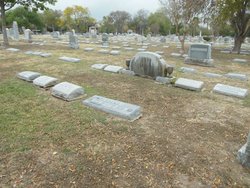
Webb plot San Antonio TX.


"He Is Not Dead, He Is Just Away," Inscription on grave marker (Albert J. Webb 1891-1919) 
(David William Carroll was buried next to him, his sister Mattie Webb Carroll's husband.)
Marker is in Mission Burial Park South, San Antonio, Bexar County, Texas, Plot: Block 2, Masonic Garden 
----------------------------------------------------------------- 

Thursday, June 13, 2019

The Webbs - some documents and photos

Great Uncle John Leroy Webb and Grandfather "Bud" Webb, a repost
John Leroy Webb

I am sharing a photo of Great Uncle John Webb (1880-1938)  What do you read from this photo? At least a dashing student. I have no idea when it was taken.

My mother's father was his brother...Albert Bud Webb (1891-1919).  They were 2 of the 8 children born in Huisache (or the Anglicized version that is now on maps) Weesatche, Texas, in Goliad County.
Albert Bud Webb (my grandfather)

Here's Bud's draft card from June, 1917, when my mother was 2 months old.  It was apparently enough to keep him from going to the war.

Registering for the Draft in World War I
(Source: Ancestry.com - not my relations!)


But unfortunately Grandfather Bud was killed by an electrical accident (bad wiring and being electrocuted) in 1919.  My mother remember it as being Christmas lights, but it happened in September, so it must have been some other wiring in the home. His business listing on his draft card said Restaurant, self employed. His death certificate said he was a restaurant proprietor, and the electrical accident was not occupational.

But back to Uncle John. He was older by 11 years than Bud.  His draft card in September, 1918 states he was a Postmaster and Clerk, for a mercantile business, partly owned by the Webb family. But he was already 39 by the time he registered for the draft.

JLW&ELH
Uncle John and Aunt Lizzy Webb, 1901

Uncle John's wife was Elizabeth (Lizzie) Hohn Webb (1883-1960) born in NY perhaps, and had parents born in  France.  They had 3 daughters, Anne Lorraine Webb Cross (1902-1949), Hazel Marguerite Webb Doughty Hinds (1908-1970), and Pearl Adelle Webb Hammerle (1918-2005).

In the 1900 Census, John was living with his 2-years-older brother, James, and listed himself as a salesman, while his brother was a bookkeeper. They lived next door (or perhaps in a building separately built on the same property) as their parents in Goliad County, TX. By the 1910 census he was living with a wife and his first 2 daughters, lists himself as a Postmaster, again in the same area of Goliad County, TX.

Between 1918 and 1920 his family had moved to San Antonio, TX, and he gave his occupation on the census as a traveling salesman of dry goods. By 1930 the census gives his sales as hosiery. He was living with his wife, now listed as born in Texas, and 2 daughters.  At this time the census tells us Aunt Lizzy's father had been born in Alcase-Lorraine, and her mother in NY.

So why go through all these details?  Well, my sons might like to know these 2 Webb men were both listed as tall on their draft cards, and having blue eyes, and light hair.  Granddad Webb had slightly balding hair in his 20s, while his older brother at 39 had light hair.


And since these are the genes which come from great grandfathers and uncles, it's nice to see that they could have lived a fairly long life for that generation.   Great Great Uncle John did die from stomach hemorrhage, at age 58.  With new medicines which treat ulcers, he probably could have lived much longer.  And working with electricity is much safer these days, as my son well knows!

Thanks for reading through all these family details.  I love pursuing the census and draft cards to find what the actual interviewer put down, even if it is different sometimes than it was on another one.  That's what makes genealogy fun for me
.