description

My own life and my opinions are shared at When I was 69.

REMEMBER: In North America, the month of September 1752 was exceptionally short, skipping 11 days, when the Gregorian Calendar was adapted from the old Julian one, which didn't have leap year days.

Monday, May 26, 2025

Some headstones to remind me

 of the lives of my ancestors for Memorial Day 2025.


The Ross family had 12 children of their own. And they also fostered my grandfather and his little sister, who were also raised by their widowed mother some of the time.

The interesting things are the relationships to my grandfather, George Elmore Rogers.

My grandfather was the son of W. Sam Rogers who was a war hero who died young, suffering from his time in Mexico fighting for Texas. 


The history of John A. Elmore is interesting, so I'm just going to copy and paste it here, after reposting the original several years ago.

Gen. John Archer Elmore 

A repost from:

Sunday, September 29, 2013

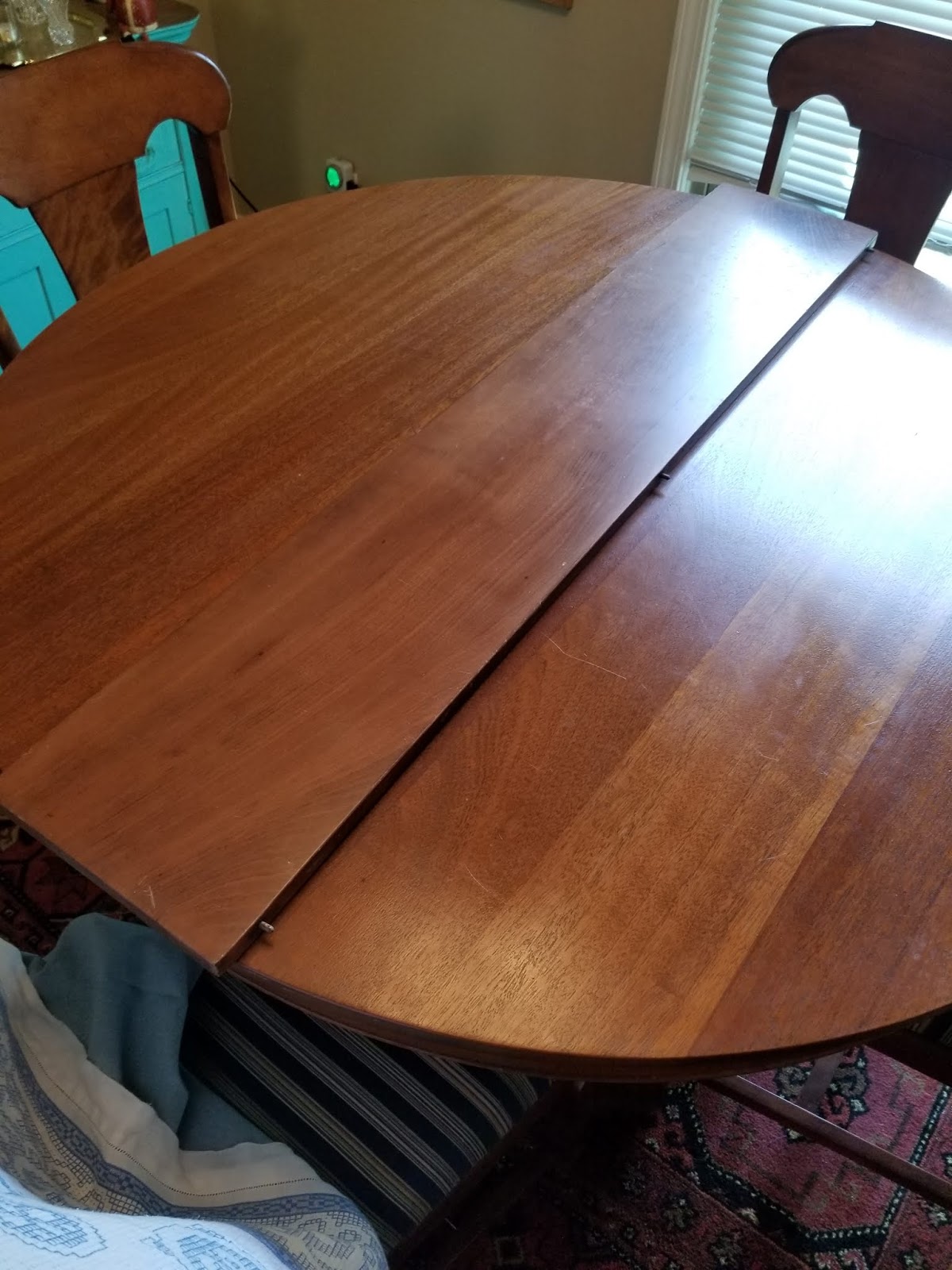
Editor's NOTE: I just (2019) received another comment about Gen. Elmore, and have included all the comments that were posted since my original blog entry in 2013...obviously they are listed on google or somewhere! I think at that time I didn't have this "family tree" blog, so I'm bringing this one over here where it belongs. And thanks to one of the comments, a friend has sent me some photos of a table with Gen. J. A. Elmore's name inscribed on the bottom...so they are included at the end of this post!

Born on 21 Aug 1762 in Prince Edward County, Virginia, this Revolutionary War hero died on 24 Apr 1834 in Wetumpka, Autauga County, Alabama, age 71.

Gen John Archer Elmore 1762-1834

Shall I tell you how I'm related first, or his story?

My father's middle name was Elmore.  He never told me (and I did ask) who he was named after.  Well, for him he just said he was named after his father, because he was Junior.  So how did his father get Elmore for his middle name, when there were no Elmores anywhere in his family ancestry?

Go WAAAAY back, and John Archer Elmore is actually our ancestor through a cousin.  (His descendent married the sister of one of my ancestors)

He had 19 children, which means lots of people are his descendants!  Thank heavens they had 2 mothers. His first wife's third child, Sophia Saxon Elmore at 15, married George Washington Ross (age 31 and a doctor).  They lived in Laurens, South Carolina, and then Mississippi. Their grandson, John Elmore Ross, married Alice Luella Rogers, (see Here for more on Alice Luella Rogers Ross) the daughter of my 3X great grandfather, George Washington Rogers.  So we're cousins, several times removed, because the Elmore Ross line went off in another direction...no blood coming my way.  (Incidentally, my post about Alice Rogers Ross isn't entirely accurate!)
(NOTE from author in 2025 - (Alice) Luella Roger Ross was my great grandaunt. I heard my grandfather, George Elmore Rogers Sr., speak of at least 4 of the Ross cousins as adults, who had correspondences or phone contact with him. They all seemed to use their middle names, so it took a while for me to connect these people with what my grandfather (Poppy) had said about them.)

So why were these people in the Rogers family named after this Revolutionary War hero that was a cousin's ancestor after all?  Probably because the matriarchs of the family wanted them to.  We have traditionally had strong women in the Rogers family.  

And my grandfather's best friends were the Ross's, who lived in the same areas many times, but did not raise my grandfather and his sister as I thought earlier (they probably lived with their mother, a widow some of their childhoods).  For all I know some of the Ross children were named after famous Rogers ancestors.  I don't think I'll chase that story however.

OK, you've patiently waited to hear about General Elmore.

Here is the way ancestor searches turn out: backward.  We start with where he remains, his tombstone.  From Mrs. P. H. Mell in (1904) Transactions, of the Alabama Historical Society, Vol. iv, pp. 541-2.
 Elmore county was named in honor of Gen. Elmore. He was deservedly popular for his "candor, good sense and sociability."
He was buried in the old family burying ground at the old homestead, "Huntington," in Elmore county. The following inscription is upon his tombstone:
In Memory of Gen. John Archer Elmore, who was born in Prince Edward County, Va., August the 21st, 1762, and died in Autauga County, Ala., April 24th, 1834, aged 71 yrs. 8 mos. & 3 days. He was a soldier of the Revolution in the Virginia Line and afterwards a member of the Legislature of So. Ca., and a General in the militia. He was a member of the Legislature of Alabama and filled various other offices of Honor and Trust in both States. He was an affectionate husband, a kind and indulgent father, a humane master, A devoted friend, and a patriotic citizen.
He entered the Revolutionary service, a mere lad, in Greene's command in the Virginia line; was with him in his tour through the Carolinas, and with him at the surrender at Yorktown. This is shown by the archives in Washington; O'Neal's Bench and Bar of South Carolina, vol. ii, pp. 85, 88, and Brewer's Alabama, p. 109. After the Revolution he settled in Laurens district, South Carolina, and resided there many years, during which time he was often a member of the legislature. He moved to Autauga county, Alabama, in 1819 and served one term in the house of representatives from this county.
His first wife was Miss Saxon, by whom he had two sons: Hon. Franklin H. Elmore, of South Carolina, who succeeded Mr. Calhoun in the United States senate, and Benjamin F. Elmore, treasurer of South Carolina. His second wife, Miss Ann Martin, was a member of the famous Martin family of South Carolina, and descended also from the Marshall family of Virginia, and from Lieutenant Nathaniel Terry, of Virginia. By this second marriage there were five sons and several daughters."
Mrs. Mell didn't have all his children in her list, see below for more details of them.

In his later life:
C M Stanley article in The Alabama Journal, Sept 13, 1959: 
"He removed to Alabama in 1819, the same year the state was admitted to the Union, settling in Autauga County and in 1821 served in the Alabama legislature. When Elmore County was created, largely out of Autauga County, the new county was named for General Elmore as was the town of Elmore in the new county."

Continuing backward, here's more on how he came to Alabama...with some different dates given.
From "Elmore Family -p. 17:
Gen. John A. and Betsy --  "Reuben Jourdan came to Alabama about 1812 to 1814, with his father, sisters and brothers and children, and was followed next year by Gen. John Archer Elmore and family." 

Pickett, from Alabama also give this picture of the Justice of the courts:
"The legislature was exceedingly anxious to see the laws enforced; and, for
that purpose, selected magistrates from among the most respectable and
prominent men throughout the State. They discharged the same duties which
the Judges of the County Courts had done previous to the adoption of the
present Probate system, and as was the practice of Virginia. A few of those
now selected must be mentioned merely to show the determination of our then
infant State, to give tone and dignity to the administration of the laws,
even in inferior courts. For the county of Autauga, for instance, John A.
Elmore,
John Armstrong, Robert Gaston, James Jackson and William R. Pickett
were elected magistrates.
    General John A. Elmore, one of these justices, was a native of South
Carolina, of the legislature of which State he had often been a respectable
member. Not long after his removal to Alabama, he represented the county of
Autauga in our legislature which then sat at Cahawba. He was a man of
firmness and much good sense, and always delivered his opinions, even in
common conversation, in a distinct and loud voice, with that candor and
honesty which characterized his conduct through life. He had a commanding
appearance, was large in person, and, altogether, an exceedingly fine
looking man. He delighted in the sports of the chase, being a most
successful and spirited hunter, and an agreeable companion in the many camp-
hunts in which he engaged with his neighbors and friends. Towards the close
of his life, we remember that he presented a dignified and venerable
appearance, and we saw him preside as chairman of several large and
exciting meetings in the town of Montgomery during the days of nullifi-
cation."(1)

(1) Albert James Pickett, History of Alabama and Incidentally of Georgia
and Mississippi, from the Earliest Period, (Birmingham Book and Magazine Co.: Birmingham, AL, 1962), pp. 662-663. 

Another mini-biography gives this family information:
Biography of John Archer Elmore - Autauga/Elmore Co.'s, AL
John Archer Elmore. An officer of the American Revolution, he was born
August 21, 1762, in Prince Edward County, Virginia, and died April 24, 1834,
in Autauga, now Elmore County. He was the son of Archelas and Susannah
(Morris) Elmore, the former a Quaker. He was a grandson of Thomas and Cicely
(Ellison) Elmore, of New Kent County, Virginia. General Elmore entered the
Continental Army while still a youth, and served under General Greene.
    General Elmore settled in Laurens District, South Carolina, after the
Revolution, resided there for many years and served in the legislature. In
1819 he removed to Alabama, settling in Autauga County, and in 1821,
represented the County in the legislature. When Autauga County was
subdivided the new county was named in his honor. The station of that name
being also named for his family.
    General Elmore was married to (1) Mary Ann Sarah Saxon, on March 1,
1788. He married (2) on March 14, 1805, to Mary Martin, a descendant of the
noted Martin family of South Carolina, also of the Marshall family of
Virginia, and of Lieutenant Nathaniel Terry, of Virginia.
    Children by his first wife were: l. Benjamin F., treasurer of South
Carolina, married Sarah Aurora Brevard. 2. Narcissa. 3. Sophia Saxon,
married George Ross
. 4. Charlotte Perry, married Abner Crenshaw. 5. Franklin
Harper, who succeeded Calhoun in the U. S. Senate, married Harriet Chestnut.
    By his second wife, General Elmore was the father of: 6. Elizabeth S.,
married Dixon H. Lewis. 7. Sarah Terry, married Benjamin Fitzpatrick.
8. John Archer, married Laura Maria Martin. 9. Morris Martin. 10. William
Augustus, married (1) Mary Ann Morrison, (2) Julia Minor. 11. Luther Alfred.
12. Henry Marshall, married Elizabeth Harris. 13. Laurence Ludlow. 14.
Physick Rush, married Susan T. Nesbitt. 15. Winfield Scott. 16. Infant. 17.
James Scott. 18. Albert Standhope, married Mary Jane Taylor. 19. Ann
Harriet, married Joseph T. Hearn.

[Source: Dictionary of Alabama Biography, Volume III, page 558] 
 Sorry, I don't have the war records, which probably tell all about the battles in which Gen. Elmore took part.  That will have to be for other historians to research.

OK, this record is my supplement to what's on Ancestry.com, and perhaps will help me or my descendents find the correct information. 


Gen. J.A.Elmore table in the home of Larry Carlson


7 comments:

  1. I am the great, great, great granddaughter of John Archer Elmore. I found your account of how his name entered into your family quite interesting. My lineage to JA Elmore is this: John Archer Elmore -> Henry Marshall Elmore -> William Augustus Elmore -> John Rugely Elmore -> William Augustus Elmore -> Patricia Elmore (me). Thanks for posting this.

  2. Hi Patricia: So glad to know we're cousins, of whatever number removed! Thanks for commenting on a post that was a long time ago. I had to go read it again (at my age I don't remember all these details). And reading it again reminded me how many ancestors I still have to research and add for the benefit of my own descendents!

  3. Hi, I hope you're doing well. I wanted to let you know that I discovered that John Archer Elmore married the niece of Supreme Court Justice John Marshall, Nancy Martin. Together they had many children, if won I'm descended from Henry Marshall Elmore. We are also related to Thomas Jefferson through the Randolphs sisters. Thomas J and John M were cousins.

  4. Thanks so much for your comment on my post. I continue to look into my ancestors, and update my blog as new information comes available. I'm so sorry not to have answered your comment all this time, as blogger never sent it to me (as it used to do once) so I could moderate it and post it to the blog. I'll be looking into your questions in the near future. Barb Rogers

  5. Greetings, cousins! Excellent page you've made here, Mrs. Rogers.
    I am John Rugeley Elmore, son of Thomas R, son of John R, son of John R, son of William A, son of Henry M., son of Gen John A, himself.
    Always thought that was the coolest middle name, "Archer", just sounds cool, but maybe that's the little boy in me creeping out, lol.
    I'm so glad to see people taking an interest in the family and our place in history.
    I am trying to get my nieces and nephews interested in our ancestors so they can understand their place historically, and ideally, derive some honor or self esteem from the achievements and esteem earned by those who came before us.

    An ex-member of my family has been slandering the good name of my late father to his grandchildren. So I am on quest to reinvigorate the pride (or at least, interest) in and of the Elmore clan that comes from honorable, upstanding citizenship, service to God and country, and charity and good nature of our ancestors significant enough to be mentioned virtually anytime any of them are mentioned during or after their lifetime by official, respected historians.
    Cousin (Aunt?) Patricia, I remember your dad. I was just a kid when I was around him so I don't remember much, but Thank You for the bit you wrote bout T. Jefferson. I had no idea we were related to him as well.
    Mrs. Rogers, you could possibly find some new visitors to your page, as I am going to send links to my nieces and nephews. And, thank you again for taking the time to, not only keep the documentation of our family fresh, but also for bringing it alive!
    Peace, joy and love, family. May Grace shine down upon you, brighter than the sun, today and each tomorrow and for all the days to come!

    PS: I never check my gmail so my usable email address is Landman0081@yahoo.com. Please, feel free to write, anytime, about anything.

  6. Greetings Elmore Clan

    I wanted to reach out to you all and let you know we are honored to have a family heirloom...namely, a round table that used to belong to Gen J A Elmore. His name is literally scribed in the underside of the table - and it's leaf. It's a truly amazing piece from the Empire Era - and means a lot to us. I was researching his name today and as I learned more and more about General Elmore, I was more and more honored to have such a piece of history in my own home. In fact, it was this research that led us into this Blog. What a pleasant surprise. We are not related to him but I wanted you to know how much it means to have such a historic piece from a true Revolutionary War Era Hero. We reside near Louisville, Ky. Knowing the General was laid to rest in Alabama, I thought it would be of some interest knowing how far his table traveled.

    I just opened a blooger account - hopefully you all can see this message. If you are interested in contacting me for pics or more info, please feel free to do so at lecjr55@gmail.com (primary email acct). I wish there was a way I could attach a picture for you to see (probably is but well beyond my limited knowledge of blogger).

    I wish you all the very best and tip my hat to the entire clan. To come from such a lineage is truly a blessing.


    1. HI there "Old School Man" and welcome to this blog which still is out there generating comments. You have a piece of history in that table. I'm glad that you've read about John Elmore, and hope you enjoy reading about all my other ancestors! I find it so interesting to write what I can find, then change it as new information is found that was buried somewhere for a long time and just came to light.


Saturday, May 24, 2025

My family and Sepia Saturday


Kate Adison was teething when her parents were cheering her older sister on at a swim meet in Atlanta GA. My son and his wife were happy to introduce her to me, but I didn't have any grandmotherly tricks that would help the unhappy little one who was a bit unhappy that day.


And here Kate is 18 years later (last week) graduating from high school in Columbus OH!! The huge ring is from the Ohio state championship in Lacrosse. She is the youngest of my son's three daughters, and also the youngest of my 6 grandchildren.

Sepia Saturday is asking for a family photo, which I already gave you at the beginning, but there are more!


ON the winning team as a Junior for State Championship!'


An informal shot of the whole family visiting St. Augustine FL last year. L to R. Kate, Russ, Michelle, Caroline and Audrey


A gathering of cousins. The 5 to the left are Lisa Hawkin's family, and she's sister to Michelle Heym. Michelle is the wife of my son Russ, and they are with their 3 daughters on the right of the photo.
From the right, Russ, Audrey, Caroline, Kate, Michelle, Christopher Hawkins, Abi, Lisa, Tom and T.J.

OK, I'll find a Sepia photo for the prompt!

Poppy's  72nd Birthday celebration, Houston TX Aug. 28, 1949  (George Elmore Rogers Sr.)
Isn't it great that someone  combined the names from the back with the original photo!


If you're in the US, hope your Memorial Day holiday is relaxing, and not too rainy (which ours is supposed to be). Canadians and English folk have a bank holiday. So not much business will be happening for many of us.

Saturday, May 10, 2025

My ancestor mothers

  How many mothers might you know about in your ancestry?

I had a few dead ends, because there were often few documents of just whoever Joe Smith married named unfortunately Mary or Susan. These women raised a family, and cared for at least one of my direct ancestors. But their own mothers remained a mystery.

So I'm getting out my trusty Ancestry app, where I think I've got about 8000 people on my main tree (yes I've got a few off shoots also, which add about 3000 more potential relatives.)

My main tree has almost 4000 photos as well. 

Let's just find some sepia mothers to share today.


My grandmother on the left with her sister.

1. Ada Phillips Swasey Rogers (my father's mother) (1886-1964)


2. Ada's mother, Zulieka Granger Phillips Swasey (Dear Nan)  (1858-1935)

Dear Nan with her granddaughter, Ada Mary Rogers


3.Dear Nan/Zulieka's mother, Mary Hull Granger Phillips,  (1829-1861)


A woman's portrait, unknown, but showing hair style and clothes worn in the 1820s.

The following are my transcriptions from copies of original letters that were written by Mary Granger Phillips:

(No notation of date or place;  MaryPhillips.001 and 002)

 There is plenty of Game in the woods but William has had little time for hunting now.  Does are rather scarse. (sic) The Black tong(?? Two letters added above word, unclear) killed a great many off last year they say.

        I have not got my Piano yet – waiting for a draft on P.O. as I think I can be better suited by sending there for it.

        I must remind you will wirte me as I am anxious to hear how you are this cold Winter.  I almost feel as if I had got back to the North.  Do you remember of ever experiencing such cold weather any Winter before?

        Lizzie writes me Mother has suffered a great deal with the Asthma, It is impossible for her to endure the cold.

 ===(on back page)

I receive the Harpers and regret I did not take the Ladys also (perhaps publications?)  I find many people even away up here (Monde?) who know you and ask with no little interst after you.

        The river is rising very fast today and we are listening for a Seamboat every moment.  There are some seven or eight flat-boats on their way down with Cotton.  Hoping to hear from you soon, I close,

                Yours affectionately,

                        Mary H. Phillips

 ------

(note by author: Lizzie is her sister, Elizabeth Granger, and Mother is probably Mary Granger. The piano arrived, according to a letter posted on_ June 10th, 1860)
(no heading, written to her Mother-in-law, Mary Gainer, see MaryPhillips.002)

 The children are quite well.  Zulie often talks of you all.  She is growing very fast and talks us nearly crazy.  Is very curious must know and understand every thing she hears and sees.  She is pretty, bad and smart and I am I regret to say entirely unable to control her never having seen ever such a temper.  I often wonder how Lizzie would manage her, although Zulie has been much spoiled (--?--) everyone, she is very affectionate, child loves me dearly  but does not want to mind.  Ada is different more mild the sweetest and caring little thing will let you kiss her all day and not get mad.  Pa Gainer says Zulie is the worst child he ever saw and Ada the best now if they do not spoil her.  She began to walk a little past nine months it is so cunning to see her walking her hair curls and she goes round

 (on back page)

jabbering to herself you all would eat her up.  I have not had a pair of shoes to fit her since those you sent and they are all worn out.  I have let her go barefooted this Summer on account of not being able to get any for her.  I do hope some goods will come to Town Bluff.  Zulie too wears anything for shoes.  I am very much troubled about getting everything.  There are no goods any near us.  I expect we shall see sights to get things to wear this Winter.  I think you will find a letter of winds if nothing else.  I will try to write often as I can.  I have on hand a monstrous pile of sewing though, but will answer all who write.  All desire Love keep a cheerful heart dear Mother. I think of you much and often.

        Your affectionate Daughter,

                        Mary

 (Author’s notes: Pa Gainer (William Phillips step-father) is in Texas, or has been to have seen both granddaughters.  His words are being relayed either to his wife, Mother Gainer, or Mary's mother, Mary Granger, by Mary.  The time may be after Confederate blockade has made goods hard to obtain.  Ada had been born Sept 15, 1860, so would be 9 mos old by June of 1861)  But the blockade wasn’t really holding manufactured goods back entirely. Perhaps goods just weren’t being shipped at this time, except for war needs.)


4. Mary's mother, Lucy Elizabeth Parsons Pulsifer,  (1807-1876) (I have yet to find out who/why the Parsons name is included for her.) See below about her earlier sister and brothers. Incidentally, she apparently died in Galveston TX in 1876 (according to a news record and a probate in 1877 in Massachusetts). Yet she, as Lucia, and an unmarried daughter, Elizabeth Granger appear on the 1880 census in Southwick, Hampton, Massachusetts. That is another one I haven't figured out yet. Her real daughter Elizabeth married and had 3 children, and continued living in Galveston. Who was this other Elizabeth and mother Lucia?

Incidentally, her brother, Joseph Perkins Pulsifer was one of the founders of Beaumont TX. Here's a bit of information about him:

PULSIFER, JOSEPH PERKINS (1805–1861). Joseph P. Pulsifer, early Texas apothecary and a founder of Beaumont, the son of Ebenezer and Elizabeth (Dwelbee) Pulsifer, was born in Newburyport, Massachusetts, on July 8, 1805. Little is known about Pulsifer's education, except that his letters show him to have been an extremely literate man. Probably through apprenticeship, he became an apothecary, and sometime after 1827 he opened a drugstore in partnership with his brother Eben in nearby Charlestown, now a suburb of Boston. There Pulsifer became a member of the Mechanics' Society and served as its secretary in 1831. Sometime during 1832 or 1833 he returned to Newburyport to work in the drug firm of Thomas Davis and Company. In the fall of 1833 Pulsifer moved to New Orleans in search of economic opportunity and found employment in the store of druggist and retail merchant Henry W. Millard . By 1835, however, the firm developed financial troubles. Pulsifer and Millard then entered into a partnership, J. P. Pulsifer and Company, with Texas merchant Thomas B. Huling . The men moved to Texas in July of that year. In a small settlement named Santa Anna, on the Neches River, they opened a store under Pulsifer's management. In the fall of 1835 the firm purchased fifty acres on the Neches River and laid out the boundaries of a new town, which they called Beaumont.

 From Beaumont, Pulsifer took an active, if nonmilitary, part in the Texas Revolution . Citizens of the Neches River Settlement, as that area was called, appointed him chairman of the Committee of Correspondence, secretary of the Committee of Safety, and a member of a local committee to draft ideas for a constitution and bylaws for Texas. He also served as Beaumont's first postmaster and as a trustee of the first school. After the revolution Pulsifer, Huling, and Millard added fifty acres to the original Beaumont townsite. By entering into partnership with Nancy Tevis and Joseph Grigsby , each of whom donated an additional fifty acres, they increased the original area of the town to a total of 200 acres. Beaumont ultimately incorporated both Santa Anna and Tevis Bluff, an older settlement about a mile upriver from Santa Anna. Pulsifer, who never married, remained a citizen of Beaumont for the rest of his life. In addition to practicing his professions of storekeeper and apothecary, he served in various public offices: collector of revenue for the port of Sabine, county clerk, county commissioner, and clerk of the Jefferson County Board of Land Commissioners. Before the first Jefferson County Courthouse was built in 1854, the county commissioners periodically held court on the second floor of his combination home and store in Beaumont. He also served as an agent in Jefferson County for the Austin State Gazette . Pulsifer died in Beaumont in 1861. The one extant volume of his correspondence remains unpublished. It covers the period from 1833 to 1836 and describes his immigration to Texas and his ordeal during the Texas Revolution.

 BIBLIOGRAPHY: 

 Judith Walker Linsley and Ellen Walker Rienstra, Beaumont: A Chronicle of Promise (Woodland Hills, California: Windsor, 1982).

 Source: Texas History Online


5.  Lucy's mother, Elizabeeth (Betsy) Dwelle Pulsifer (and similar spellings)(1762 or 72 - 1824) Betsy had her first three children die quite young. So they named later children the same names. Joseph the first died at 9 months in 1798. Elizabeth had her death noted as May 28, 1800, but no birth record. And Ebeneezer the first just lived from July 1801 to April 20, 1806.


6. Betsy's mother, Elizabeth Browne Dwelly (or similar spellings)  (1737 or 1740 - abt.1768) 


7. Elizabeth's mother, Abigail Goodenow Browne,  (1716-1803)


8. Abigail's mother, Prudence Morrison Goodenow/Goodnew,  (1691-1720)


And we know no further along that maternal line... though there were mothers of each of the fathers which would mean about a hundred or so more mothers just from my one grandmother's line!

Prudence was my seven times great grandmother. 


Sharing with Sepia Saturday where I'm completely off the meme this week. But we'll get by, and share my Mother's Day eve post with my sepia friends!


Today's Quote:

Maya Angelou


Friday, May 9, 2025

Another Pulsifer (Pulsipher) ancestor

 Remembering ancestors:


Map of Ipswich MA,1717

Benedictus Pulsifer (Benedict) abt. 1635– abt. 1710

Birth 1630-1635  Whitehall, England

Death 1695-1710  Ipswich, Essex, Mass

HISTORY OF BENEDICT PULSIPHER
abt. 1630 – 1695
"Benedict Pulsipher had settled in Ipswich, Massachusetts, according to his own statement, by 1659. He was probably married a year or two before coming to this country. He very likely brought his wife and infant son, Benedict II or Junior. We have no record of the birth of the son (Benedict II) or of another son, John, but (daughter) Elizabeth’s birth in 1669 is recorded in the town records of Ipswich. His first wife, of whose maiden name we are ignorant, died at Ipswich 16 July 1673. His son, Mr. William Henry Pulsipher says, "We’re of little help or comfort to his family." Evidently John moved to Gloucester, where he became a respected member of the family. There he probably supplemented his income as a farmer by occasionally building or helping to build houses for his neighbors. He is styled in one document "Yeoman" and in another "mason". In the History of Gloucester", J. J. Babson – 1860, page 130, appears the following:
According to tradition near a spot still occupied by one if his descendants on the old road leading to Coffin’s Beach (Gloucester). In 1688 he had a piece of land "given to the house where he then lived." Benedict Jr., proved to be a "roving blade", according to Mr. William Henry Pulsipher. "We hear," says Mr. Pulsipher, "of a Benedict Pulsipher engaged in an Indian fight in Maine in 1688. This was probably Benedict Jr.  Cotton Mather refers to the incident in his ‘Magnalia Christi Americana’ London 1702. VII, page 63. Benedict, Jr., probably never married. In 1690 he engaged in Sir William Philip’s expedition to Quebec as a member of Captain Abraham Titton’s Company, and it is quite possible that he was killed or taken prisoner in the unfortunate attempt to capture the Canadian stronghold.
"A Compendious History of New England" by Morse and Parrish, page 146, makes a confirmatory reference to this episode. 

After the death of his first wife on 16 July 1673, Benedict, Sr. married in the succeeding February, Susan A. Waters of Salem, Massachusetts, who was the fifth daughter of Richard and Joyce Waters. She was born at Salem, Massachusetts 01 Feb 1649. "Benedict Pulsipher, Sr. brought his young wife to Ipswich immediately after his marriage and entered upon what might be termed the second period of his career." The records show that his young wife was rather vain. She liked to adorn herself. "She,  among others, braved the laws in 1675 by appearing in the meeting house with a silk hood and scarf. She and the others were arrested, tried, and fined ten shillings each for yielding to their vanity."
Benedict Pulsipher was a man of some means. He was also "a man of considerable education" in a period when educated Englishmen were rare.
Late in 1663 or early 1664 he bought a dwelling house with outhouse, orchard, gardens, etc. of Moses Pingry of Ipswich, Massachusetts, which property Pingry had acquired in 1652 of Richard Scofield who came to New England in 1635. This estate was situated on the north of the "Tom River". Its site is now occupied by a factory. The original deed to this property was either lost or "casually" burned, and on 7 Feb 1667, Pingry made a supplementary deed of the property which he gave Benedict Pulsipher. Benedict was then styled a "planter."
He added to his estate in 1664. In the same year, 1664, the town of Ipswich granted him a share (No. 55) in the town lands on Plumb Island, Castle Neck, and Hogg Island. He continued to reside at Ipswich, pursuing his occupation as planter or farmer for many years.

SOURCe:Ancestry and descendants of Jonathan Pulsifer and his wife, Nancy Ryerson Pulsifer of  Maine

Line of descent from Benedict 1 Pulsifer to Jonathan 6 Pulsifer 

 ----------------------


I think it's interesting to find that this ancestor is also an ancestor of Joseph Smith of the Church of Latter Day Saints (Mormons.) We're all related, aren't we?

He's my 8th great grandfather on my grandmother Ada Phillips Swasey Rogers' tree.

Though several documents mention (many years later) that he'd been born in England, and that he was educated, the Ancestry tree people today (2025) are saying he was born in Ireland. Until I find more details that click, I'll stay with the unknown English ancestors. The good news is that his second wife, Susanna Waters Pulsifer does have parents and so I'll look to add to the ancestors on my tree in that way.
-----------

Today's quote:

"I feel that art has something to do with the achievement of stillness in the midst of chaos. A stillness which characterizes prayer, too, and the eye of the storm. I think that art has something to do with an arrest of attention in the midst of distraction.” 
Saul Bellow,


Saturday, April 12, 2025

Shoemaker

 Whether an ancestor was listed as a cobbler or a shoemaker, it's pretty much the same thing. Isn't it?

My 6 times great uncle. Thomas Bass, (1719-1786) Lived in Norfok VA and Bertie, NC was listed as a cordwainer or shoe maker.

Cordwainer vs. Cobbler vs. Shoemaker
Getting the Lingo Right

Before we get started, we need to know what we are discussing:

  • Cordwainer: The English term for shoemakers, which originated from France
  • Shoemaker: Artisan who works with new leather to make shoes
  • Cobbler: Forbidden to work with new leather. They are the shoe repairmen, who must make their repairs with old leather
While nowadays the terms may be interchangeable, it was considered a major insult to call a shoemaker a cobbler! After all, it is believed that Cobblers got their name from the phrase “to cobble things together,” which meant to work clumsily.

Walking through history

Shoemakers have existed all through human history, whether it’s been:

  • Working with cord and leather or grass to create the first sandals to
  • Carving out the insides of the wooden clogs used in the Medival Europe (yes, those famous shoes from Holland) to
  • Working on leather moccasins to
  • Working with new leather to create soft slippers for royalty
They’ve been one of the most important trades in the history of the world.
They even helped with the creation of the new colonies in America:


  • In the first American colony of Jamestown, VA, 1607, a cobbler was abroad the ship to the new world. Since importing new materials was expensive, the cobblers were able to get people’s shoes going until the Cordwainers could come to the colony later in 1629.
  • Shoemakers and Cobblers were such important trades that they started the first unions in the country! The Shoemakers of Boston, of 1648, and The Daughters of St. Crispin (the patron saint of Cobblers) was the first female union in the US.
  • Cobblers were also important because, as they traveled around to the rural towns and cities of the American colonies, they took the news with them as well.
  • Eventually, the shoemakers and cobblers were able to settle down in cities and have their clients come to them. They were able to have apprentices and have tiers of labor, which helped lead them right into the storm of the Industrial Age.
Surviving the Industrial Age
Industrialization was not a kind time for many people and the makers and cobblers were no different. The 4 people who helped usher in the fall of these men were:


  • 1812: Marc Brunei created a tool to help affix leather uppers to the shoe outers with metal pins
  • 1846: The creation of the sewing machine made sewing leather faster and in need of fewer laborers.
  • 1850 Thomas Crick created a rolling riveter and cutter for shoes
  • 1864: Lyman Blake creates a sewing machine for shoes

Thus the factories were able to mass-produce shoes at cheaper prices, taking the shoes out of the 

hands of the people who had been making them since civilization began.


It was around the 1850s when, as work became scarce, shoemakers had to turn to the lowly art of shoe repair to make ends meet. This was when the distinction between shoemaker and a cobbler began to fade, until today they are almost synonymous to most of the public.

So, What Now?
While shoemakers and cobblers are not common anymore, there are still some trying to keep the trades alive. The recession in 2008 did spurn customers back towards the cobblers to keep their shoes lasting longer as money was tight.

The younger generations, like Millenials and Gen Z, are trying to live a less wasteful society so there 

is a chance that shoes repaired and well-kept will keep the cobblers in business in the future.


Thanks to the Old Timey


So when one kicks off his/her shoes and wiggles their feet in the sand, they can thank a shoemaker for keeping their feet safe from sand-spurs, hot sand, rocks, pieces  of broken glass, rough edged shells, etc.

Today's quote:

What power has love but forgiveness? -William Carlos Williams, poet (17 Sep 1883-1963)

Saturday, April 5, 2025

The year without summer and my ancestors

 What tangent might I go off on today? Well, I decided to check on my ancestors who lived through a trying time, meteorologically speaking that is. 1816  is known as the year without a summer .

In 1815 a volcano in Indonesia (as it is now called) caused enough ash to be in the atmosphere that the sun reflected from it, and cold wet weather caused massive crop failures in Europe and the New England states in the United States.

The main cause of the Year Without a Summer is generally held to be a volcanic winter created by the April 1815 eruption of Mount Tambora on Sumbawa.

Countries such as Great Britain, Ireland, and France experienced significant hardship, with food riots and famine becoming common. The situation was exacerbated by the fact that Europe was still recovering from the Napoleonic Wars, adding to the socio-economic stress.

North America also faced extreme weather conditions. In the eastern United States, a persistent "dry fog" dimmed the sunlight, causing unusual cold and frost throughout the summer months. Crops failed in regions like New England, leading to food shortages and economic distress. These conditions forced many families to leave their homes in search of better farming opportunities, contributing to Westward expansion.

In the spring and summer of 1816, a persistent "dry fog" was observed in parts of the eastern United States. The fog reddened and dimmed sunlight such that sunspots were visible to the naked eye. Neither wind nor rainfall dispersed the "fog", retrospectively characterized by Clive Oppenheimer as a "stratospheric sulfate aerosol veil".

The weather was not in itself a hardship for those accustomed to long winters. Hardship came from the weather's effect on crops and thus on the supply of food and firewood. The consequences were felt most strongly at higher elevations, where farming was already difficult even in good years. In May 1816, frost killed off most crops in the higher elevations of MassachusettsNew HampshireVermont, and upstate New York. On June 6, snow fell in Albany, New York, and Dennysville, Maine. In Cape May, New Jersey, frost was reported five nights in a row in late June, causing extensive crop damage. Though fruit and vegetable crops survived in New England, corn was reported to have ripened so poorly that no more than a quarter of it was usable for food, and much of it was moldy and not even fit for animal feed. 

The crop failures in New England, Canada, and parts of Europe caused food prices to rise sharply. In Canada, Quebec ran out of bread and milk, and Nova Scotians found themselves boiling foraged herbs for sustenance.

Sarah Snell Bryant, of CummingtonMassachusetts, wrote in her diary: "Weather backward." At the Church Family of Shakers near New Lebanon, New York, Nicholas Bennet wrote in May 1816 that "all was froze" and the hills were "barren like winter". Temperatures fell below freezing almost every day in May. The ground froze on June 9; on June 12, the Shakers had to replant crops destroyed by the cold. On July 7, it was so cold that all of their crops had stopped growing. Salem, Massachusetts physician Edward Holyoke—a weather observer and amateur astronomer—while in Franconia, New Hampshire, wrote on June 7, "exceedingly cold. Ground frozen hard, and squalls of snow through the day. Icicles 12 inches long in the shade of noon day." After a lull, by August 17, Holyoke noted an abrupt change from summer to winter by August 21, when a meager bean and corn crop were killed. "The fields," he wrote, "were as empty and white as October." The Berkshires saw frost again on August 23, as did much of New England and upstate New York.

Massachusetts historian William G. Atkins summed up the disaster:

Severe frosts occurred every month; June 7th and 8th snow fell, and it was so cold that crops were cut down, even freezing the roots ... In the early Autumn when corn was in the milk [the endosperm inside the kernel was still liquid] it was so thoroughly frozen that it never ripened and was scarcely worth harvesting. Breadstuffs were scarce and prices high and the poorer class of people were often in straits for want of food. It must be remembered that the granaries of the great west had not then been opened to us by railroad communication, and people were obliged to rely upon their own resources or upon others in their immediate locality.

In July and August, lake and river ice was observed as far south as northwestern Pennsylvania. Frost was reported in Virginia on August 20 and 21. Rapid, dramatic temperature swings were common, with temperatures sometimes reverting from normal or above-normal summer temperatures as high as 95 °F (35 °C) to near-freezing within hours. Thomas Jefferson, by then retired from politics to his estate at Monticello in Virginia, sustained crop failures that sent him further into debt. On September 13, a Virginia newspaper reported that corn crops would be one half to two-thirds short and lamented that "the cold as well as the drought has nipt the buds of hope". A Norfolk, Virginia, newspaper reported:

It is now the middle of July, and we have not yet had what could properly be called summer. Easterly winds have prevailed for nearly three months past ... the sun during that time has generally been obscured and the sky overcast with clouds; the air has been damp and uncomfortable, and frequently so chilling as to render the fireside a desirable retreat.

Regional farmers succeeded in bringing some crops to maturity, but corn and other grain prices rose dramatically. The price of oats, for example, rose from 12¢ per bushel in 1815 to 92¢ per bushel in 1816. Crop failures were aggravated by inadequate transportation infrastructure; with few roads or navigable inland waterways and no railroads, it was prohibitively expensive to import food in most of the country.

Maryland experienced brown, bluish, and yellow snowfall in April and May, colored by volcanic ash in the atmosphere.

----------------

So I just spent an hour on my private Ancestry tree straightening out (who or how does this mix-up keep occurring on my tree?) various people who were married to their mothers, and had their wives as their daughters born the year they were 1 year old!

There is one widow whose husband was alive and well and didn't die till after her. But she was called his widow on several original sources. But how were their lives effected by the cold of 1816 summer? No idea...

So I started looking at my ancestors from Massachusetts...to see if there were any deaths in 1816. So far, none.

In the Rhode Island (probably Quakers) family of the Swaseys, one daughter was born on May 8, 1814, in Newport, RI, and died Sept. 20 of 1815, same city. It's interesting that the same name was again given to another daughter born on April 11, 1827, who lived till 1853.

That's all that my sleuthing has discovered, since many of the sisters/brothers of my direct line haven't been "fluffed out." That means many nieces and nephews of 'great' generations haven't even been added to my tree. Since I've already got about 7600 people, with quite a few photos also, I have only looked back at the New England ancestors on my father's line. There probably are some as well on my mom's side of the family.

One ancestor did die age 50 in 1816. In North Carolina. He was John Franklin Tate III. His older sister (Casandra "Cassiah" Elizabeth Tate 1765-1851) was born in Cherokee County, NC. That is the area where the Eastern Band of Cherokee now live. The Cherokee were forced to leave their homes in 1838 and join 4 other tribes on the Trail of Tears, forced removal to the Oklahoma reservation. But it's very unlikely my 4 time great grandmother probably had any Indian blood. She was the first born of 9 children, with John III her next younger brother, who was born elsewhere.

----------

But let's see if I can find just one photo of relations/ancestors looking like the Sepia Saturday posted suggestion.

John LeRoy Webb's wife was Lizzie Hohn. John LeRoy Webb was brother to my own grandfather, Albert J. "Bud" Webb, who had died when my mother was just 2-1/2 years old.

The Hohn Family 1894   Standing L to R: Elizabeth, Theodore, Louis, Emil, Henry ==> Seated parents: Louis & Johanna ==> On lap: John ==> On floor L to R: Paul, Caesar ==> Not present: Oscar (died 1891) & Alexander (born 1896)


From L to R: Alex, Caesar, Paul, Lizzie, Henry, Emil, Theodore, Louis P F

John LeRoy Webb married Lizzie Hohn Webb, and here are lots of men in ties...probably her brothers. Since John LeRoy died in 1938, it's possible this photo was taken after that date since he's not in it....or he was the photographer!


 From Sepia Saturday this week we have...

Women in Suits...hats, and purses, with sensible shoes, and a man.

My photos have an opposite ratio, with only a few women and lots of men!