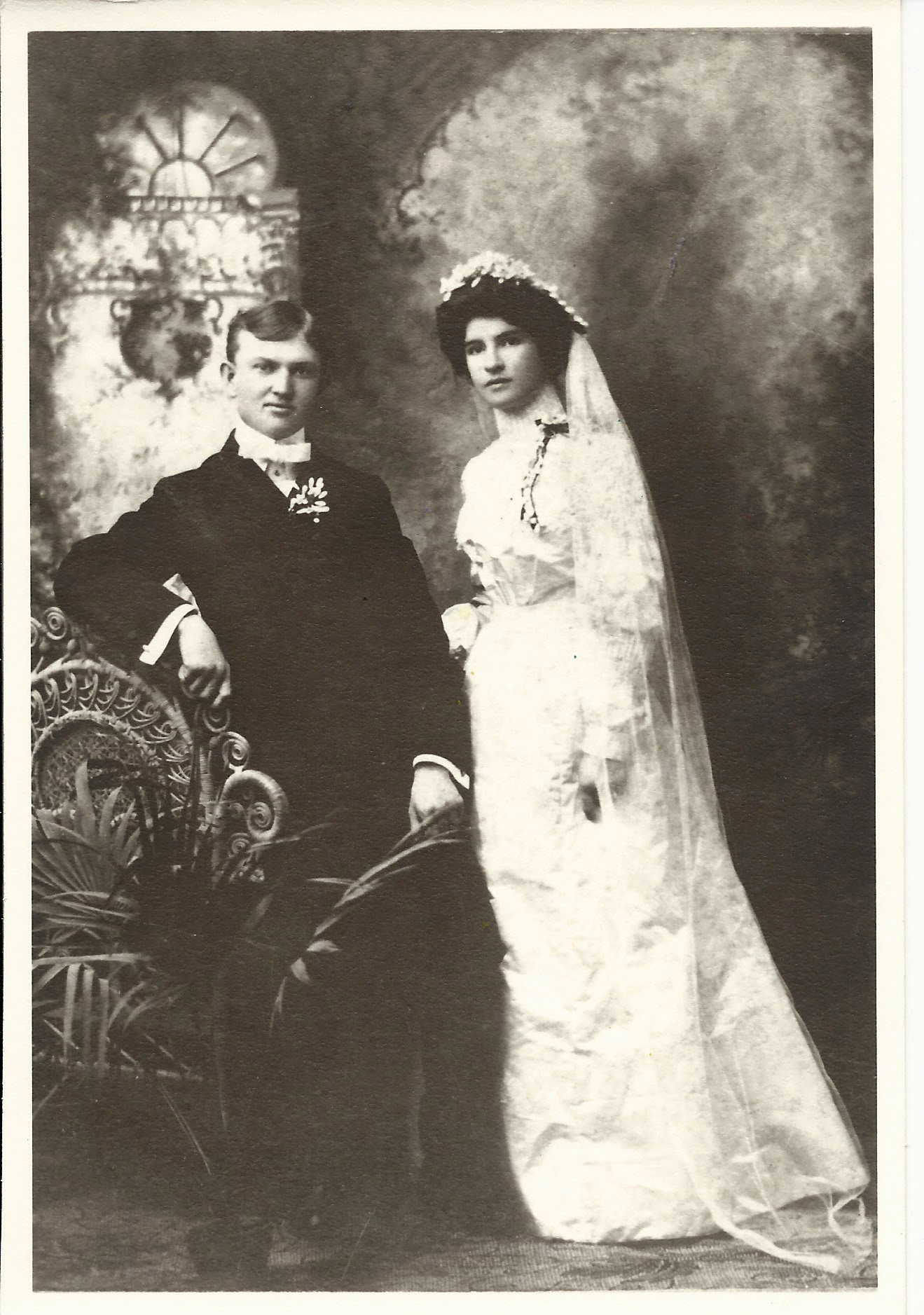
Sepia Saturday has a photo of a country church, misnamed as being in Sharps County, Tennessee.
It's not the SS fault that there isn't any county in Tennessee named Sharps. There is just a village named Sharps Chapel, TN. (I checked the list of counties in Tennessee.) It is located in Union County, TN.

If this church in 1933 was in Sharps Chapel, TN, it watched as the WPA built the Norris Dam to create Norris Reservoir. Today, many vacation homes and recreational activities take place in Sharps Chapel along the shores of Norris Reservoir.
Sharps Chapel History
Originally called Clinch River until its name was changed in 1869, Sharps Chapel has earned its reputation as one of Norris Lake’s most picturesque destinations. Nestled on the shores of Norris Lake, this town is not lacking for beautiful views. However, with history and historical sites almost as bountiful as its views, Sharps Chapel is an enchanting place to visit or settle.
The town’s most well known historical site is the Bait Ousley house, listed in the National Register of Historic Places since 1978. Originally built in 1835 by Jacob Sharp, son of the American Revolutionary War hero, Henry Sharp. The elder Sharp had originally settled in the area on a 700 acre land grant. This house was sold to Jacob Ousley in 1874 and remained in his family for 132 years. Remaining unoccupied for almost 30 years, this house gained the reputation as being haunted, until it was finally purchased and restored in 2006.
Even a trip to the post office in Sharps Chapel will surround you in history. The post office building was built in 1866. Since the day it was opened, the building has operated continuously.
You will also find the administrative office for Chuck Swan State Forest and Wildlife Management Area located here in Sharps Chapel. This area offers 24,444 acres of rolling terrain and wildlife. You will find picnic areas, 47 historical cemeteries and even a shooting range.
I doubt that this is the same church. But I don't live there, so don't know for sure. |
| Oak Grove Baptist Church, Sharps Chapel, TN |
WIKIPEDIA gives some history...
The Norris Dam ... A hydroelectric and flood control structure ...its construction in the mid-1930s was the first major project for the Tennessee Valley Authority, which had been created in 1933 to bring economic development to the region and control the rampant flooding that had long plagued the Tennessee Valley.
Norris Freeway, a section of U.S. Highway 441 widened in the 1930s to aid in dam construction, crosses the top of Norris Dam and connects the area to Interstate 75 at Rocky Top, Tennessee to the west and Knoxville, Tennessee to the south. Along with the reservation maintained by TVA for the operation of Norris Dam, most of the lower Norris Reservoir is surrounded by conservation lands, including Norris Dam State Park adjacent to the reservation, the Cove Creek Wildlife Management Area across the lake to the north, and the Chuck Swan State Forest, which protects a large undeveloped area a few miles upstream.
The building of Norris Dam and its accompanying reservoir required the purchase of over 152,000 acres (62,000 ha) of land. 2,841 families and 5,226 graves were relocated. The community of Loyston, located about 20 miles (32 km) upstream from the dam site, was entirely inundated. Approximately one-third of Caryville, at the head of the reservoir's Cove Creek embayment, was flooded and a number of structures in the town had to be moved.
The Clinch River flows southwestward for 300 miles (480 km) from its headwaters in Virginia through the rugged, sparsely populated hills of northeastern Tennessee before emptying into the Tennessee River near Kingston. Norris Dam is located at just over 79 miles (127 km) upstream from the mouth of the Clinch, immediately downstream from the river's confluence with Cove Creek, which joins the river from the northwest. The reservoir includes parts of Anderson, Campbell, Union, Claiborne, and Grainger counties. Norris Reservoir spans a 73-mile (117 km) stretch of the Clinch from the dam to River Ridge at the Claiborne-Grainger county line.
The Civilian Conservation Corps built recreational facilities and aided in the removal of various structures.[3] The town of Norris, Tennesseewas initially built as a planned community to house the workers involved in the construction of this dam.[7]
Norris Dam was completed and the gates closed on March 4, 1936, constructed at a cost of $36 million. The dam's first generator went online July 28, 1936.
SOURCE: wikipedia.
And there's a very interesting article I just found about a very old house in Sharps Chapel, TN.
one-of-my-most-interesting by Kim Trent, included below.
Resurrection in Sharps Chapel
One of my recent field trips took me 45 minutes north of downtown to a place called Sharps Chapel. Located in Union County, just north of Maynardville off Highway 33, it's a place I'd never thought to visit until friends undertook an extreme relocation from urban Knoxville to that rural community. They've been inviting me out to see their new, old digs for two years, but it took a driving tour with Union County historian Bonnie Peters to get me out there. Now I wonder why I waited so long.
My friends Dave Whaley and Tomica Miller were fixtures in the Old North Knoxville neighborhood for years. So was the bed and breakfast they operated - The Brimer House Inn. Their inn was a popular destination, but Dave discovered he preferred restoration work over changing sheets and dealing with the sometimes maddening behavior of their paying house guests. So he and Tomica began driving country roads looking for land and plotting their escape to a peaceful, rural setting.
The story of how they found their current project sounds like a combination of serendipity and fate. 
Dave and Tomica first stumbled upon the Jacob Sharp House when they were lost on the back roads of Union County. They could just make out the form of the two story brick house obscured by vines and brush at the end of a dirt road. After a little trespassing they knew they had found a treasure and wanted to find out who owned it.
They backtracked to a little store down the road where one of the locals told them it was known around there as the Bait Ousley House and they should contact the WIVK DJ Gunner, who was related to the owners. Gunner put them in touch with R.T. Ousley who, along with his sister Pauline Janes, had inherited the house from their parents in 1974.
The five-bay Federal style house was built in 1835 by Jacob Sharp on 700 acres of land originally granted to his father, Revolutionary War veteran Henry Sharp. Jacob was a Methodist minister and successful merchant at the time. In 1874 the house was sold to Jacob Ousley and remained in his family for 132 years. The house was listed in the National Register of Historic Places in 1978 due to community efforts to protect it, but it languished, unoccupied, for almost 30 years. It was known as the area's old haunted house and few thought it would survive.
The Ousleys had given up hope of restoring it when architectural salvager Scott Brady showed up in 2003 and bought the place with the intention of moving it to another location. Luckily, he was distracted by a massive distillery deconstruction in Kentucky and the house remained in place.
This turned out to be a bit of serendipity. Dave had met Brady while restoring the Brimer House Inn and was able to contact him immediately about the house. A purchase was arranged and the Ousleys happily sold them the land on which the house stands.

It could be said Dave and Tomica purchased a ruin in 2006. The house was uninhabitable, so after they sold the Brimer House Inn they took up temporary residence in a mobile home on the property. The roof and portions of some walls of the house had failed. Some critical architectural details were missing. That is another interesting facet of this tale.
For several years Dave had admired some massive fireplace mantels Brady had stored at his salvage business. When Dave talked with him about replacing the missing mantels out at Sharps Chapel, Brady informed him the mantels he'd admired came from the Sharp House and he returned them to be installed in their original location. They are there now in the place where they were installed almost 150 years ago.

The Jacob Sharp House is definitely a product of the time it was built. Most materials original to the house were produced on the land surrounding it. The bricks were made by slaves and you still can see a handprint captured on a brick in the wall of the ell at the back of the house. The floor and ceiling joists were milled from trees cut on the farm.
When Dave decided to complete most of the restoration himself he also decided to follow in the tradition of those who built the house. He has been working on it for over two years so far. He and a friend cut yellow pines from the property and set up a saw mill on site to cut the floor and ceiling joists needed to replace those that had rotted. But even portions of those compromised original timbers will be remilled and incorporated into floors needing repair. With the help of WASCO, masonry experts, Dave took down and cleaned 30,000 bricks from the east and south walls of the ell and put every single one back in place atop the limestone foundation rebuilt on new footers.

On the day I visited, I was given a tour of the house and property. As we explored the portion of the house Dave and Tomica will occupy first, an elderly yet spry man I'd never met climbed the back staircase to join us. I was taken aback when he announced he'd been born in the house. It was R.T. Ousley, farmer, educator and descendant of Jacob Ousley. He was obviously pleased by the current efforts to preserve his family's architectural heritage. I am grateful he helped get the house into good hands.
The question I had for Dave seemed obvious to me. When are they moving in? They bought the place in 2006 after all. His answer was well thought out and requires the patience of a saint. He explained to me that before they can occupy a portion of the house the following things need to happen over the next 18 months:
- Replace the deteriorated two over two replacement windows with new ones replicating the original nine over six windows.
- Complete the repair / replacement of the roof and floors.
- Complete the septic, plumbing and electrical systems.
After that they can move out of their temporary housing and begin work on the front portion of the house. I think this can be described as nothing short of a labor of love. I will look forward to seeing the final restoration since it will be a rare and beautiful thing.


If you are wondering what the executive director of Knox Heritage is doing running around in Union County, here's your answer:
Knox Heritage began as the preservation advocacy organization for Knoxville and Knox County 35 years ago. During that time we were supportive of other preservation organizations in the region but never had the resources to provide the assistance needed by some communities. That changed last year when we won a three year grant from the National Trust for Historic Preservation to expand our services to the nine county region. The Partners in the Fieldprogram allowed us to hire Ethiel Garlington to provide assistance in the eight counties surrounding Knox County and reconstitute the Nine Counties Preservation Alliance. For more information on how we can assist your community or organization, contact Ethiel at (865) 523-8008 or egarlington@knoxheritage.org.
An Update! It's great that very recently (thanks to DuckDuckGo search engine) another article has come out about the house, and the couple who are working on it...
Historic Bate Ousley House Continued
Submitted by Betty Bullen on Tue, 03/05/2019
..."They moved their newly purchased mobile home on the property next to the house and in March of 2006, the work began. The first year they cleaned and stacked 30-thousand bricks! One must think of the structure as two homes, the back part and the front part. Their plan was to finish the back of the home to live in and after 5-years of labor they moved in. Work on the front half of the house began in 2011. Dave is meticulously restoring every part of the house. He has rebuilt all the windows as they appeared in 1835, using antique glass salvaged from historic houses in Fountain City and Old North Knoxville. He has recycled salvage lumber, wired and plumbed the house. The only structural changes necessary to make the house flow was to build stairs from the basement to the main level and cut through a 14-inch thick brick wall to connect the front part of the house to the back part. They had a local sawmill cut the materials, mostly yellow pine and poplar, exactly like what was used originally, matching original dimensions. Dave made draw knives to recreate the original molding, and has scrapped and sanded all of it by hand. He has rebuilt four chimneys and two fire boxes with four to go. He has taken two floors off to get to the original flooring which he plans to refinish and reinstall. He will replaster and refinish the walls and plans to cover one wall completely with a mural recreating a painting that Pauline Janes husband did in 1960. The new front porch is as close as possible to the original being done from photos of the house.
When asked what's your future plans, Dave exclaims that in 2019, they plan to add two more porches. When the project is finished in 5 to 10 years, or maybe never, as he never tires from the work, they plan to use the two front rooms to display artifacts about the home and the area. An 18' X 18' two story brick building in back of the house that originally served as a kitchen with living quarters upstairs, and later as a smoke house was taken down. Dave plans to rebuild this structure and use it as a guest house; add geo thermal heat and air; rebuild the corn cribs and out buildings; recreate the atmosphere of the original plantation.
While this endeavor has been taxing on mind, body, and relationship, they still feel the enthusiasm and excitement to finish it. Dave and Tomica have been married for 25 years and share the love for preserving old homes. While the work may be completed in 10 years, the love will continue. They feel like they were lured to Union County and consider the friendships they have developed with the Ousleys and Janes as precious and special. J. T. and Pauline have given their help and support and a wealth of information. The Whaleys love hearing the old-time stories of them growing up there.
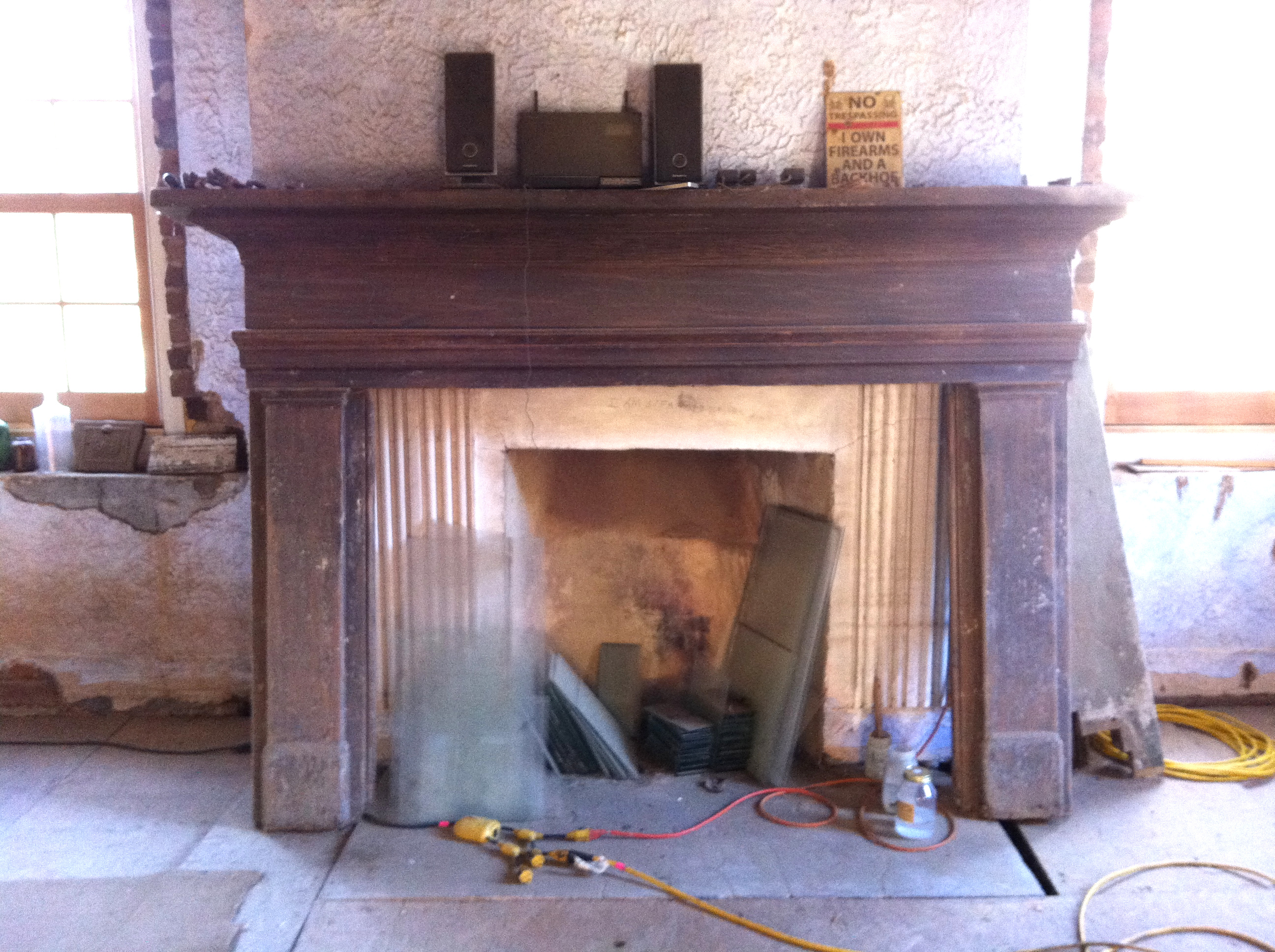
Source: https://www.historicunioncounty.com/article/historic-bate-ousley-house-continued
Shared with Sepia Saturday! Great stories about just about everything.